
“The key is not to prioritize what’s on your schedule, but to schedule your priorities.” – Stephen R. Covey, The 7 Habits of Highly Effective People
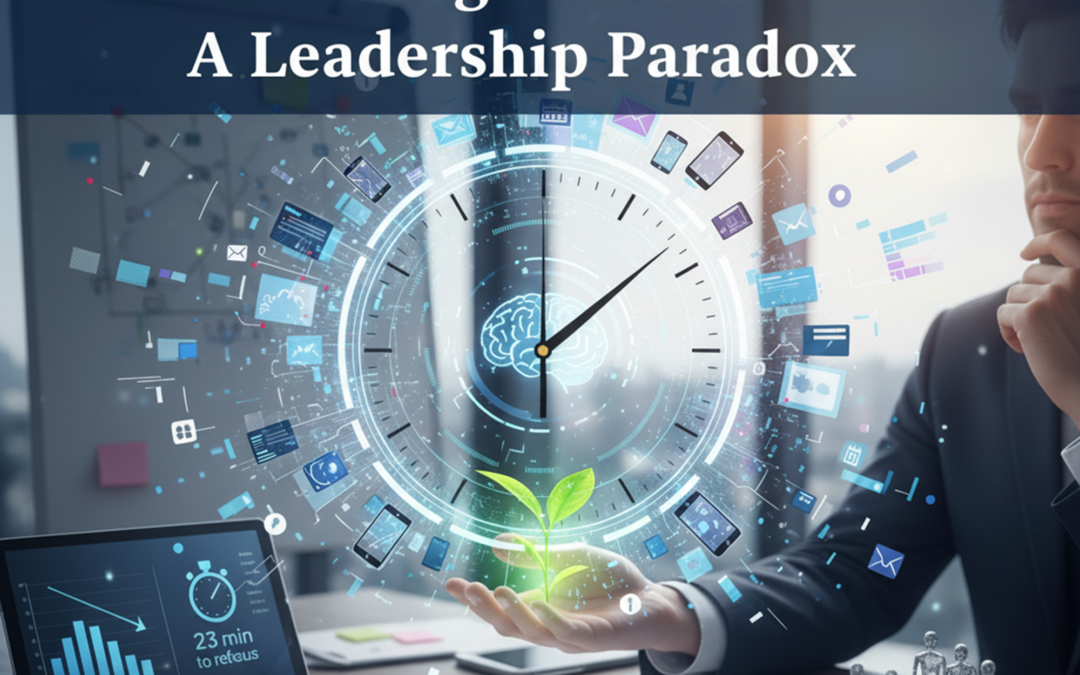
In today’s hyper-connected world, the constant flow of information presents a significant paradox for modern executives: it is both a powerful tool and a profound challenge. This duality of being constantly accessible yet perpetually distracted has made effective time management more critical than ever. For leaders, mastering time is no longer just about personal productivity; it’s a cornerstone of effective leadership and organizational success.
The Modern Dilemma: A Blessing and a Curse
The “always-on” culture is a double-edged sword. While it offers unprecedented opportunities for connectivity and rapid response, it also fuels a state of continuous partial attention. The result is a workforce struggling to find deep focus amidst a sea of digital noise. This environment, where urgency often masquerades as importance, is a breeding ground for reactive leadership rather than proactive strategy.
The Theoretical Framework: Beyond To-Do Lists
To navigate this complex landscape, executives must move beyond simple to-do lists and embrace robust time management frameworks. One such powerful model is the Eisenhower Matrix, which categorizes tasks based on urgency and importance. This strategic tool compels leaders to differentiate between what is truly vital for long-term goals (Important/Not Urgent) and what is merely a pressing demand on their time (Urgent/Not Important). By focusing on Quadrant II activities, such as strategic planning, relationship building, and identifying new opportunities, leaders can shift from firefighting to architecting the future.
The Statistical Reality of Wasted Time
Recent Workplace statistics starkly highlight the need for such a strategic approach
- The Productivity Illusion: Global productivity saw minimal growth in 2024. This stagnation underscores a disconnect between being busy and being productive. Low employee engagement further exacerbates this issue, with a disengaged workforce costing the global economy billions in lost productivity.
- The Cost of Distractions: Digital distractions are a primary culprit in the erosion of focus. Research indicates that it can take an average of 23 minutes and 15 seconds to fully refocus after a single interruption. With the constant barrage of notifications and the temptation of social media, the cumulative loss of focus throughout the workday is staggering. This constant context switching can consume a significant portion of an employee’s time.
- Meeting Overload: Recent data reveals that executives can spend an average of 23 hours per week in meetings. A significant portion of this time is often considered unproductive. This not only drains valuable time but also contributes to employee burnout and disengagement, preventing leaders from focusing on high-impact strategic work.
- The “Busy Work” Trap: It’s estimated that a substantial amount of the workday is spent on “work about work”tasks like responding to emails, attending status update meetings, and searching for information. This administrative overhead pulls employees away from the skilled, strategic work they were hired to do, hindering innovation and progress.
Real-World Implications: The Leadership Im
perative
The consequences of poor time management at the executive level ripple throughout an organization. When leaders are constantly distracted and overwhelmed, they create bottlenecks, delay decisions, and foster a culture of reactivity. Conversely, leaders who master their time empower their teams, drive strategic initiatives, and cultivate an environment of focus and purpose. For instance, leaders who effectively delegate and protect their teams from low-value tasks see higher engagement and productivity.
Master Your Time, Master
Your Leadership
The challenges of modern time management are undeniable, but they are not insurmountable. By understanding the theoretical frameworks, acknowledging the statistical realities, and implementing practical strategies, executives can transform time from a relentless adversary into a powerful ally. An Executive Masterclass on Time Management can equip leaders with the advanced skills to navigate this complex environment, diagnose time traps, and implement proven frameworks to lead their teams to a new level of productivity and strategic focus.
