
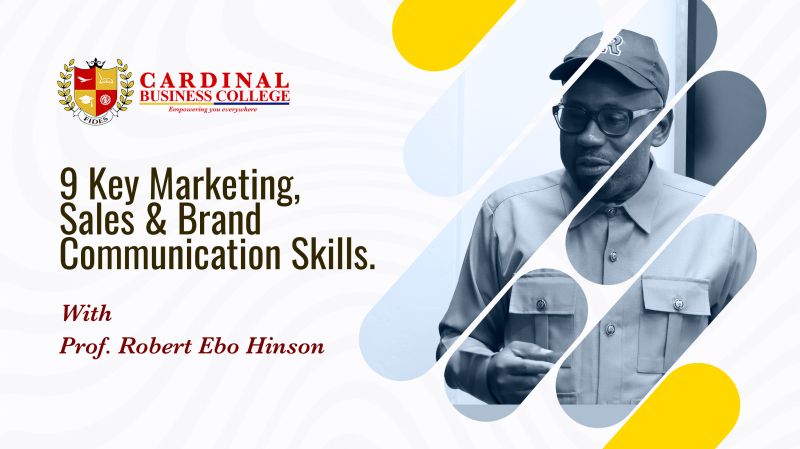
The technology train stops for no one … we must be able to show how marketing is growing the business and growing sales.” Professor Robert Ebo Hinson
In today’s crowded business world, products can be copied, technologies can be matched, and pricing advantages rarely last. What truly sets organizations apart is how they position themselves, communicate their value, and build trust. Modern leadership is no longer just about strategy and operations, it is about mastering marketing, sales, and brand communication as core leadership skills.
Professor Robert Ebo Hinson, DPhil, PhD, has long argued that these skills are not “soft” but central to growth and sustainability. Leaders who embody them become trusted voices, not just managers of processes.
It begins with positioning. A strong brand doesn’t just tell people what it does; it shows them why it matters. Strategic positioning gives organizations clarity and credibility in markets where attention is scarce. Purposeful content builds on this by moving beyond noise and self-promotion, offering insights that educate and inspire. When leaders create content that sparks meaningful conversations, they establish thought leadership that lasts longer than any campaign.
But content and positioning must be matched with how leaders sell. The old days of scripted pitches are gone. Executives now expect collaboration. Consultative selling, listening, co-creating, and providing tailored solutions, transforms sales from one-time deals into enduring partnerships. Combined with data-driven analytics, which turn information into strategy, leaders can anticipate needs and make smarter decisions that deliver measurable impact.

At the same time, modern leadership requires personalization. Every client, employee, or partner is on a different journey, and leaders who tailor their communication build stronger trust. Alongside this comes the ability to manage executive relationships and networks, recognizing that authentic connections remain the lifeblood of long-term growth.
Yet facts and strategies only go so far. Storytelling is what makes ideas stick. The world’s strongest brands, Nike, Apple, Tesla, don’t just market products; they tell stories that inspire identity and loyalty. Leaders who master storytelling create meaning that facts alone cannot. And as organizations operate globally, cross-cultural competence becomes essential. Sensitivity, openness, and adaptability allow leaders to navigate differences and build trust across borders.
Finally, everything must come together through integrated communication. Consistency across platforms ensures that whether someone encounters a brand through social media, advertising, or direct interaction, they experience the same voice and values. Integration transforms scattered messages into resonance.
Together, these nine skills, positioning, content, consultative selling, analytics, personalization, relationships, storytelling, cultural competence, and integration, form the blueprint for modern leadership. They are not optional. They are the foundation for organizations that want to thrive, sustain growth, and leave legacies that last.
At the same time, modern leadership requires personalization. Every client, employee, or partner is on a different journey, and leaders who tailor their communication build stronger trust. Alongside this comes the ability to manage executive relationships and networks, recognizing that authentic connections remain the lifeblood of long-term growth.
Yet facts and strategies only go so far. Storytelling is what makes ideas stick. The world’s strongest brands, Nike, Apple, Tesla, don’t just market products; they tell stories that inspire identity and loyalty. Leaders who master storytelling create meaning that facts alone cannot. And as organizations operate globally, cross-cultural competence becomes essential. Sensitivity, openness, and adaptability allow leaders to navigate differences and build trust across borders.